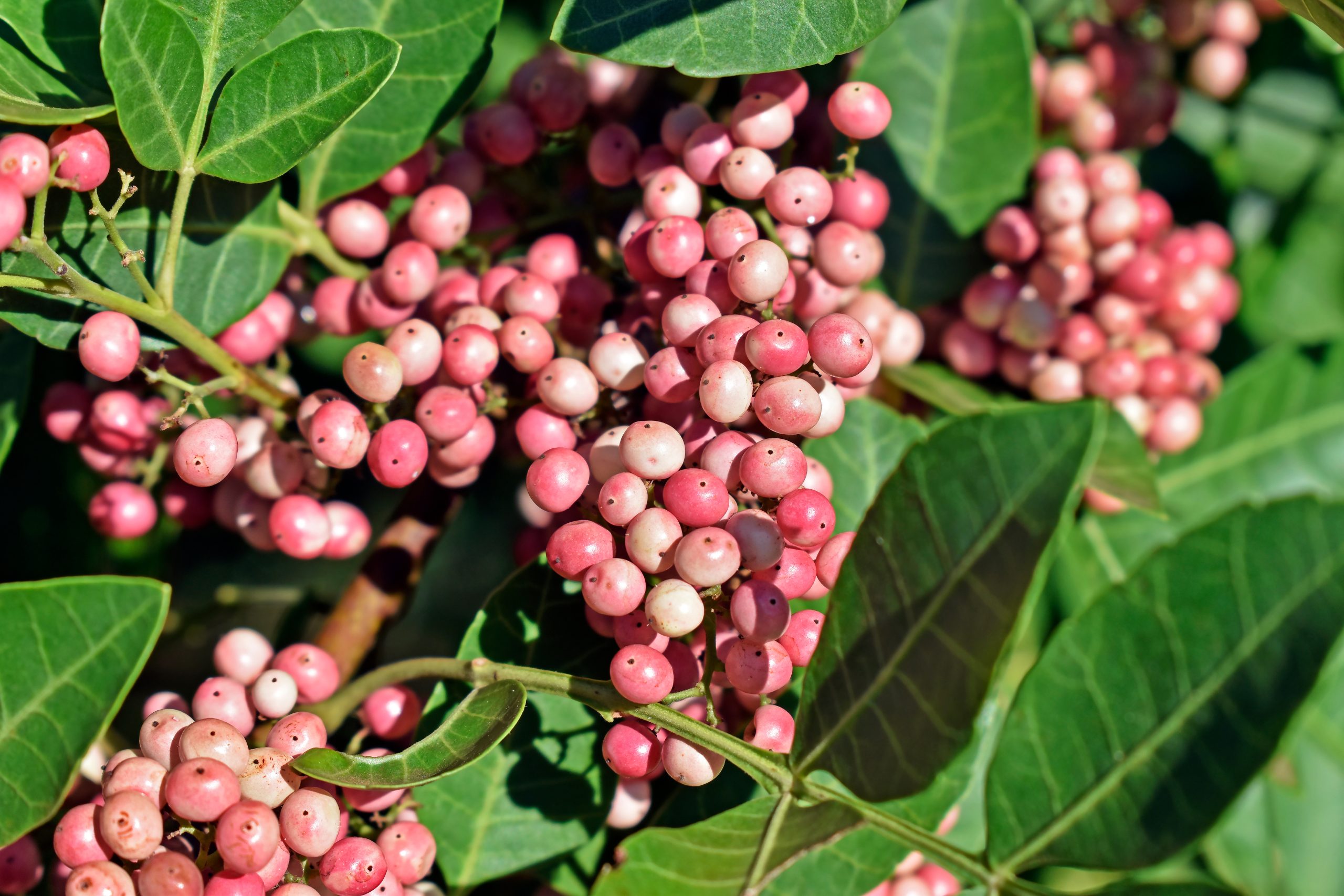
The Pink Pepper Phenomenon
Why Schinus Terebinthifolius Is Redefining Modern Scent
In the world of high-end perfumery and artisanal crafting, certain ingredients act as “disruptors.” They don’t just add a scent; they change the structural integrity and energy of a composition. Pink Pepper (Schinus terebinthifolius) is arguably the most successful disruptor of the last two decades. While it sat in the shadow of Black Pepper for centuries, it has now emerged as the “sparkle” behind some of the world’s most iconic modern scents.
1. Not Your Average Spice
The first thing to understand about Pink Pepper is that it is a botanical imposter. It isn’t related to the Piper nigrum (black pepper) family at all. Instead, it is a drupe—a fleshy fruit—from the Brazilian Peppertree, a member of the Anacardiaceae (cashew) family.
This botanical distinction is crucial. Because it is a berry and not a seed, it lacks the heavy, pungent alkaloid piperine which gives black pepper its “bite.” Instead, Pink Pepper offers a flavor and scent profile that is high-pitched, rosy, and incredibly fresh. In olfactory terms, it provides “verticality”—an upward-moving scent that hits the nose instantly with a bright, tingly sensation.
2. The Molecular Magic: Limonene & Phellandrene
Why does Pink Pepper smell so “fizzy”? The answer lies in its chemical makeup. Our Terebinthifolius extract is exceptionally rich in specific terpenes that dictate its behaviour:
- Limonene: The same terpene found in citrus rinds, providing that immediate zesty “pop.”
- Alpha-Phellandrene: This adds a sophisticated peppery-woody facet with a hint of minty freshness.
- Delta-3-Carene: A sweet, resinous component that gives the berry its characteristic “piney” or “forest-air” undertone.
When these molecules are extracted via Supercritical CO2, they remain intact. Traditional heat-based distillation often destroys these delicate terpenes, but our CO2 process ensures the “shimmer” of the fresh berry is perfectly preserved.
3. Application Guide: How to Formulate Across Industries
Pink Pepper is remarkably versatile. Here is how to utilize this powerhouse ingredient depending on your medium:
For Fine Fragrance Perfumers
Use Pink Pepper to bridge the gap between citrus top notes and floral hearts. It is the secret to taking a “flat” fragrance and giving it a professional, three-dimensional shimmer.
Usage: 1% – 5% of your fragrance concentrate. It works exceptionally well with Rose, Cardamom, and Vetiver.
For Candle Makers
In wax, Pink Pepper provides an incredible “cold throw.” It helps brighten heavier scents like Sandalwood or Amber, preventing them from smelling “cloying” when the candle is unlit. In the “hot throw,” it adds a crispness that feels like high-end hotel branding.
Usage: 0.5% – 2% of your total fragrance load. Pair with Grapefruit or Palo Santo for a modern, spa-like vibe.
For Soap & Cold Process Makers
Pink Pepper CO2 is a top-note accelerator. While it doesn’t “anchor” a scent alone, it provides the initial “zing” that customers love when they first open the packaging. It is non-discouloring in most CP soap applications.
Usage: 3% – 5% of your scent blend. Mix with Patchouli or Cedarwood to give the scent more “legs” through the curing process.
For Skincare & Body Oils
Beyond the scent, Pink Pepper is often used in body-toning formulations. It is rich in antioxidants and is believed to support healthy circulation, making it a favourite for “energising” body oils and scrubs.
Usage: Keep below 1% for leave-on skin applications to avoid sensitivity, especially in facial products.
4. Sourcing & Sustainability
As the demand for Schinus terebinthifolius grows, so does our commitment to responsible sourcing. These trees are hardy evergreens, but the quality of the oil depends entirely on the timing of the harvest. We source berries when they reach a deep, vibrant crimson—the point of maximum aromatic oil saturation.
5. Final Thoughts for the Artisan
Whether you are blending a minimalist “skin scent” or a complex cold-process soap, Terebinthifolius is the bridge that connects the earth to the sky. It brings a sense of light, air, and contemporary luxury to almost any accord.